
Honda Engine Repair Parts Guide
Honda engine repairs rarely involve just one isolated part. Cooling, sealing, exhaust flow, valve timing, and engine mounting all work together to keep the engine smooth, reliable, and protected from heat or vibration-related damage. This guide explains common symptoms, what parts to inspect, and how to choose the right OEM-style replacement components for a practical repair plan.
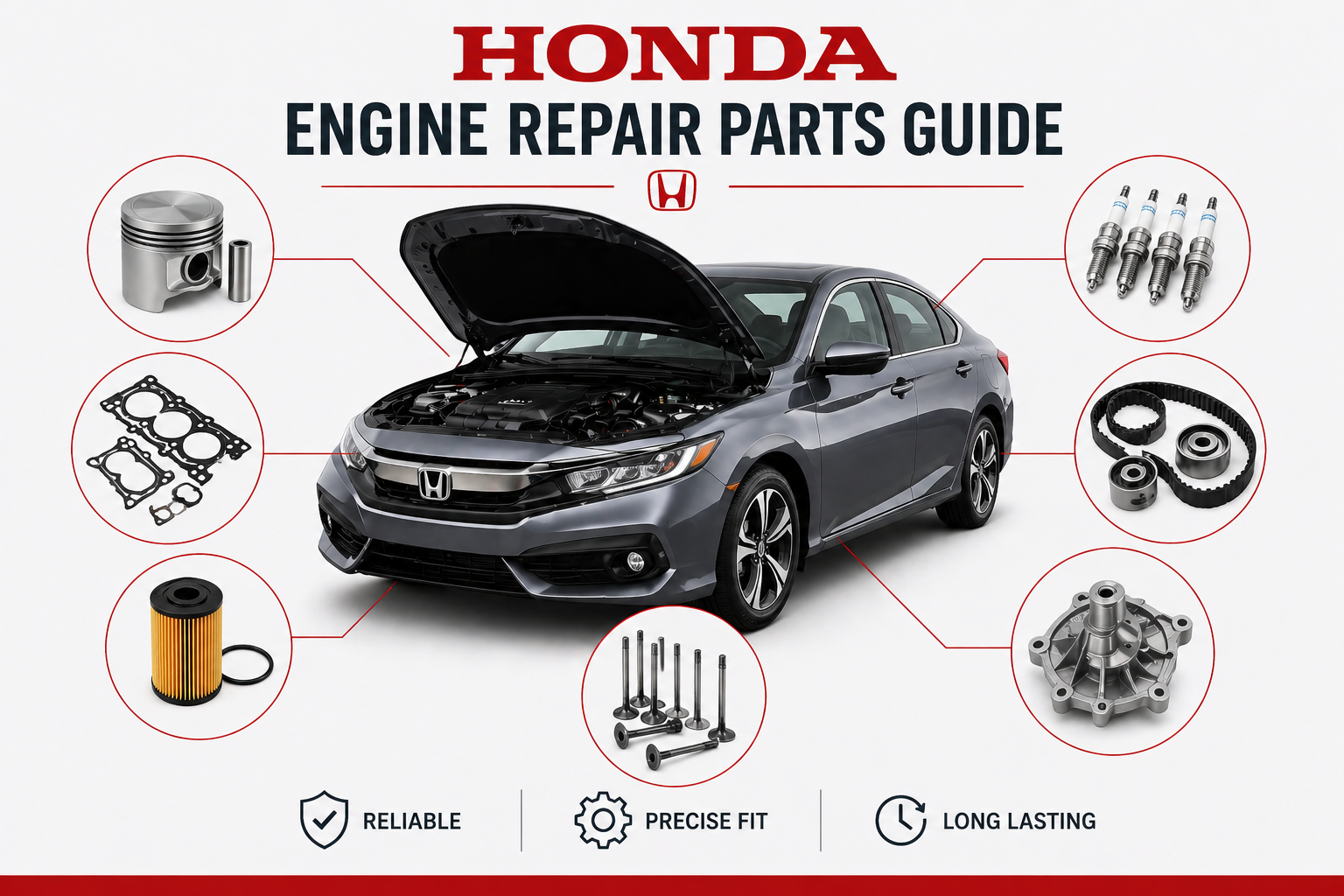
Common Signs Your Honda May Need Engine Repair Parts
Engine problems often show up as changes in sound, smell, temperature, or drivability before a major failure occurs. Watch for excess vibration or clunking from worn motor mounts, coolant leaks, overheating, noisy water pump operation, oil spots near the oil pan area, exhaust ticking near the manifold, or valve train noise from camshaft and lifter wear.
These symptoms should be diagnosed early. A small leak, loose mount, or cooling issue can create extra stress on surrounding parts and turn a straightforward repair into a larger job.
Engine Mounts Help Control Vibration and Protect Nearby Components
Motor mounts secure the engine while absorbing vibration from normal operation. When they wear out, a Honda may feel rough at idle, clunk during acceleration, or shift more harshly as the engine moves under load.
If vibration is the main complaint, inspect Honda motor mounts before assuming the engine itself is failing. Replacing worn mounts can restore smoother operation and reduce strain on hoses, wiring, exhaust connections, and other nearby components.
Cooling System Parts Protect the Engine From Heat Damage
Your Honda cooling system helps control operating temperature and prevent overheating. A failing water pump may cause coolant leaks, bearing noise, rising temperature readings, or poor coolant circulation.
During cooling repairs, check replacement Honda water pumps along with hoses, coolant condition, and related sealing surfaces. For vehicles equipped with oil temperature control components, Honda oil coolers may also be part of the repair plan.
Overheating should never be ignored. Excess heat can damage gaskets, warp cylinder head surfaces, and increase the cost of the repair.
Cylinder Head, Camshaft, and Block Components Handle Deeper Engine Repairs
Some engine repairs involve internal or upper-engine components. Cylinder head parts may be needed when there are valve, sealing, overheating, or compression-related issues.
The camshaft and lifters control valve movement and timing. Worn camshaft and lifter parts can contribute to ticking noises, rough running, or poor performance. For more extensive repairs, Honda cylinder head parts and Honda engine block parts may be needed after a proper inspection.
These repairs require exact fitment because small differences in engine configuration can affect compatibility.
Gaskets Help Stop Oil Leaks Before They Become Bigger Problems
Oil pan gasket leaks are common signs that the lower sealing area needs attention. You may notice oil spots under the vehicle, a burning oil smell, or oil residue around the pan.
Replacing Honda oil pan gaskets early helps protect oil level and reduces the risk of contamination on nearby parts. During gasket replacement, inspect fasteners, mating surfaces, oil pan condition, and any related seals that may be disturbed during the repair.
Exhaust Manifold and Header Issues Can Affect Noise and Performance
An exhaust leak near the manifold or header may sound like ticking, tapping, or puffing, especially at startup. Leaks can also affect engine noise, exhaust smell, and overall drivability.
When diagnosing these symptoms, inspect Honda exhaust manifolds and headers along with mounting hardware and gaskets. Replacing related sealing hardware during the job can help prevent repeat leaks.
Choosing the Right Honda Engine Parts
Start by confirming the exact year, model, trim, and engine. Many Honda parts vary by engine size, emissions configuration, transmission pairing, or production range.
Plan connected repairs together whenever possible. For example, a cooling repair may also require coolant, seals, or related hardware. A gasket job may reveal worn mounts, damaged fasteners, or other leak sources. Choosing parts built for the correct Honda application supports fitment, repair quality, and long-term reliability.
Frequently Asked Questions
Can a bad motor mount feel like an engine problem?
Yes. A worn motor mount can cause vibration, clunking, or harsh movement that feels like an engine or transmission issue. Inspect mounts before assuming the engine has internal damage.
Should I replace a water pump before it fails?
If the water pump shows leaks, noise, bearing play, or poor circulation, replacement should not be delayed. Preventive replacement may also make sense during related cooling or timing work, depending on the Honda model.
Are oil pan gasket leaks serious?
They can become serious if oil level drops or the leak spreads to hot exhaust parts. Fixing the leak early helps protect lubrication and keeps the engine area cleaner.
What causes exhaust manifold leaks?
Common causes include worn gaskets, loose or damaged hardware, cracks, corrosion, or heat cycling over time. The manifold, header, gasket, and mounting hardware should be inspected together.